Einleitung
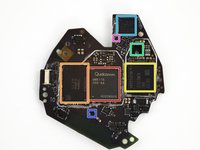
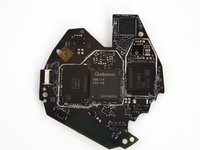
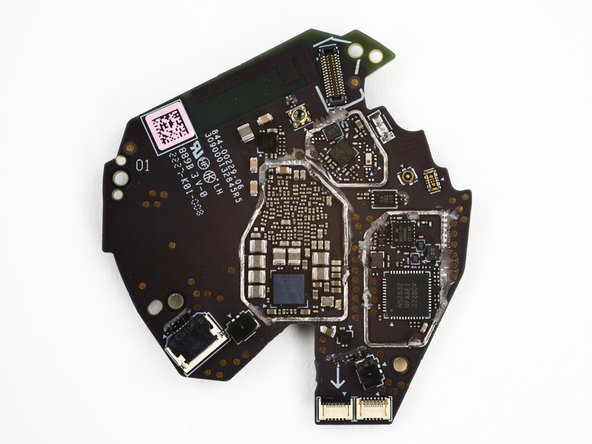
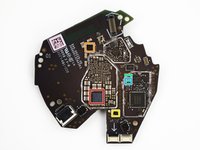
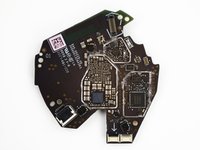
Zu Schritt 1 der Anleitung ↓Hier ist eine Zusammenfassung der Chip-Identifikation für das Meta Quest Pro Headset und die Controller.
Schau dir unseren Meta Quest Pro Teardown für weitere Details an.
Besonderer Dank geht an das Community-Mitglied CChin für den Beitrag!
Einführungsvideo
-
-
-
Qualcomm SXR2155P Snapdragon XR2+ Anwendungsprozessor
-
Micron MT62F1536M64D8CL-026 WT:B 12 GB LPDDR5 SDRAM-Speicher
-
Western Digital SDINFDO4-256G 256 GB NAND-Flash-Speicher (UFS)
-
Lattice Semiconductor LIF-MD6000-6 CrossLink FPGA
-
Qualcomm PM8150L Energiemanagement
-
Cmedia CM7120 Audio-DSP & CODEC-Hub
-
Analog Devices MAX98360AENL 3,2 W Mono Class-D-Audioverstärker
 Frag FixBot
-
-
-
Infineon CYPD3177 USB-Typ-C-Port-Controller
-
Qualcomm SMB1355 Li-Ion-Akkuladeregler mit Quick Charge 2.0/3.0/5.0
-
Qualcomm PM3003A-Energiemanagement
-
Texas Instruments TLC59401 16-Kanal-LED-Treiber
-
Texas Instruments TS3USB221 USB-2.0-SPDT-Analogschalter
-
Awinic AW37504CSR – Dual-Ausgang-Netzteil
-
Analog Devices MAX77827B 1,6-A-Inverswandler
-
-
-
Texas Instruments TPS62148 2,0-A-Abwärts-Spannungswandler
-
Texas Instruments TPS61378-Q1 4,8-A-Synchron-Aufwärts-Spannungswandler
-
SG Micro SGM66056 2,2-MHz-Synchron-Aufwärts-Spannungswandler
-
OmniVision WS4694C 28-V-Lastschalter mit Überstrom- und Überspannungsschutz
-
SG Micro SGM2578AAD 2-A-Lastschalter
-
Texas Instruments TLV7031 Einzelkomparator
-
Texas Instruments TLV9054 Vierfach-5-MHz-Rail-to-Rail-Operationsverstärker
-
-
-
SG Micro SGM4T245 4-Bit-Bus-Transceiver
-
SG Micro SGM2045-1.20 300 mA / 1,2 V LDO-Spannungsregler
-
SG Micro SGM2045-3.00 300 mA / 3,00 V LDO-Spannungsregler
-
Nexperia 74AUP3G34 Dreifach-Puffer
-
Nexperia 74LVC1G07 Einzel-Puffer
-
NXP Semiconductor NX30P0121UK 3-A-Überspannungsschutz
-
Awinic AW32710CSR Lastschalter mit Überspannungsschutz
-
-
-
onsemi FSA4480UCX USB-Type-C-Analogschalter
-
SG Micro SGM4553 2-Bit-bidirektionaler Spannungspegelwandler
-
OmniVision DPDT-Analogschalter (möglicherweise)
-
-
-
Murata LBEE5xx1WK ? Typ 1WK Bluetooth-/WLAN-Modul
-
Nordic Semiconductor nRF52840 Bluetooth 5.3 Low-Energy-SoC
-
Qualcomm PM8250 Power-Management
-
Qualcomm PM8150B Power-Management
-
Qualcomm PMK8002 ? Taktgeber
-
Texas Instruments TCA6418E 18-Bit-I/O-Expander
-
Renesas SLG59M1717V 5-A-Lastschalter
-
-
-
-
Wahrscheinlich Texas Instruments LP5907UVE-1.2 250 mA / 1,2 V LDO-Spannungsregler
-
DC-DC-Wandler
-
-
-
Bosch Sensortec BMM150 3-Achsen-Magnetometer
-
-
-
Qualcomm SM6115 Snapdragon 662 Octa-Core-Applikations-/Baseband-Prozessor
-
Samsung K4U8E3S4AD-MGCL 1 GB LPDDR4X-SDRAM-Speicher
-
Samsung KLM4G1FETE-B041 4 GB eMMC-NAND-Flash-Speicher
-
Qualcomm PMI632-Energiemanagement
-
Microchip ATSAMD20G17 32-Bit-Mikrocontroller
-
Renesas DA7281 Haptik-Treiber
-
Texas Instruments SN74AUC1G32 einzelnes 2-Eingangs-ODER-Gatter
-
-
-
-
-
Nordic Semiconductor nRF52832 Bluetooth Low Energy 5.3 SoC
-
Skyworks SKY66111-11 Bluetooth Low Energy Front-End-Modul
-
Vermutlich Qorvo QPC8019Q DPDT-HF-Schalter
-
Qualcomm WCN3950 WLAN 802.11a/b/g/n/ac, Bluetooth 5.0 & UKW-Radio
-
-
-
Allegro MicroSystems A1391 Hall-Sensor
-
-
-
TDK-InvenSense ICM-42688-P 6-Achsen-MEMS-Beschleunigungssensor & Gyroskop
-
-
-
Cmedia CM7120 Audio-DSP- und CODEC-Hub
-
Analog Devices MAX98360A Klasse-D-Audio-Verstärker
-
Qualcomm SMB1355 Batterieladegerät
-
Infineon CYPD3177 USB-Typ-C-Port-Controller
-
Texas Instruments TLC59401 16-Kanal-LED-Treiber
-
-






1 Kommentar zur Anleitung
Any photo-and-text-based teardown of the entire device like iFixit used to do? Love the company, but the fact that there aren't non-video articles on this under the Teardowns section is honestly a bit of a letdown. Would it be possible to bring them back? They're a really useful resource.
